Tango was my band who had an album out on A&M Records
in 1973. It contained ten of my original songs and featured
appearances by the legendary John Hartford, writer of “Gentle
On My Mind” on banjo and fiddle, and “Sneaky Pete”
Kleinow, formerly of the Flying Burrito Brothers, on pedal
steel guitar. A separate single called "Holy Moses"
was released the following year. The songs we recorded
were mostly rock and country rock. The story of Tango
is a classic example of all the things that can go wrong on
the business side of music. We were a very tight band
that made some very good records and at least one that was
great, my personal favorite, “I’m Brown.”
"I'm Brown" can stand alongside James Brown's "Say
It Loud (I'm Black and I'm Proud)" and Helen Reddy's
"I Am Woman" in that they're all anthems about positive
self-image and identity. It was recorded and first released
in 1972 on Capitol Records with me as a solo artist.
"I'm Brown" is essentially a protest song with a chorus
which says
"don't you know I'm brown can't you see my face, but
I'm first a member of the human race." I'm pleased
that when I wrote the song at the tender age of 22, I had
the wisdom to say in the lyrics that I'm proud to be brown,
but I'm first a human being. In those early days of
minority movements, there was a lot of reverse racism and
sexism, the "my group before and above all" mentality.
Unlike most other Chicano groups of the early 70s whose styles
were a mix of Latin, r&b, and doo wop, we were influenced
by artists such as the Beatles, Buffalo Springfield, Bob Dylan,
The Band, and Poco. We did, however, acknowledge our
Latino roots with songs such as the aforementioned “I’m
Brown” and “Allesandro,” which was bilingual.
I did all the lead vocals and played rhythm and lead guitar,
as well as keyboards. John Valenzuela played lead guitar
with great style and taste. Richard Rosas was on bass
and Ernie Hernandez on drums, a very tight and rootsy rhythm
section.
Tango was a band that had evolved
over a ten year period. My first band was the Escorts,
later Mark & the Escorts, which started in 1963 when I
was 13 years old. The rhythm section of Mark & the
Escorts was the same one mentioned above, Richard Rosas and
Ernie Hernandez. (Ernie, Richard and I played together
with various other musicians from 1964 through 1974, with
a break from 1970 through ‘72.) Mark & the
Escorts evolved into the Men From S.O.U.N.D. in 1966, morphed
into Nineteen Eighty- Four (named after George Orwell's classic
book) in 1969, and then had the two year split described above.
We reconvened as the Mudd Brothers, with the addition of the
aforementioned John Valenzuela on guitar, and were re-christened
Tango in 1973 when we recorded for A&M Records.
I had split from Richard and Ernie in 1970 after we recorded
ten of my earlier original songs with producer/engineer Tommy
Coe, who had written a hit song for Jerry Wallace called “How
the Time Flies.” Tommy Coe was a great guy and
talented musician and engineer, who took us under his wing
and taught us a lot about the studio and how to lock in and
be a tight band. We did the recordings on speculation
in 1969. Even though Tommy was not able to secure us
record deal, it was a fun time and a great learning experience.
We spent months in the studio, often recording all night.
We also met some amazing artists who recorded there at the
time, such as the young Jackson 5 and country legend, Buck
Owens.
After
Nineteen Eighty-Four split up, with the help of East L.A.
manager/producer Art Brambila who shopped my demo, I went
on to record a single on Ode Records as a solo artist with
legendary producer Lou Adler of the Mamas and the Papas and
Carole King fame. The single consisted of two of my
original songs, “Lila, Love Me Tonight” and “Dare
I Touch You, Marylou?” The sessions featured me on vocals and lead and rhythm guitar, accompanied by
Joe Osborn on bass and Hal Blaine on drums, a rhythm section
who had played on some of the biggest hits of the 60s, including
“Mr. Tambourine Man” by the Byrds and “California
Dreamin’” by the Mamas and the Papas. My
record got lost in the midst of the phenomenal success of
Carole King’s classic “Tapestry” album on
the same label. Ernie and Richard had meanwhile put
together a tight band with John Valenzuela on guitar and Steve Verdugo on piano that was playing around town. I saw
them play at a small club in Pasadena and was very impressed.
When I got my next opportunity to record, I asked them to
back me and they agreed. Art Brambila had convinced
Capitol Records that there was a wealth of talent in East
L.A. and got a budget to record Eastside artists with Capitol
getting the right of first refusal. Several artists
were recorded and, fortunately for me, Capitol picked my recordings
to release. We recorded eleven of my original songs
for Capitol Records with me as a solo artist in 1972.
The engineer on eight of the eleven songs was B.B. Cunningham of Memphis,
Tennessee, who had scored a hit in the 60s with “Let
It All Hang Out.” He wrote and sang lead on the
song by the Hombres, which was covered by John Mellencamp
in the late-80s. We got along great with B.B. and he
captured the sound we wanted. Two singles (four sides)
were released, “Rock & Roll Queen” backed
with “Lonely,” and “I’m Brown”
backed with “Livin’ Off the Land.”
The eleven songs could have been released as an album, but
Capitol didn’t think America was ready for a Chicano
band sounding like a country rock band.
With that setback, along with a falling
out with Brambila, with the help of my lawyer I moved to A&M
Records, who purchased all the masters from Capitol.
John, Richard, Ernie, and I recorded four more of my songs
at A&M with Joe Wissert as producer. Joe had produced
such diverse artists as Earth, Wind and Fire, Gordon Lightfoot,
the Turtles, and Boz Scaggs. The "Tango" album
wound up being the four new songs along with six of the original
eleven recorded for Capitol. The powers that be then
decided they wanted a band concept rather than me as a solo
artist. We wanted to use the name “Mudd Brothers” we
had been using on gigs around Southern California.
They didn’t like the name and wanted me to come up with one
that had a Latin sound since we were Chicanos, even though
the music had almost nothing to do with Latin music.
The movie “Last Tango In Paris,” starring Marlon Brando, was
the rage at the time so I thought why not Tango. The
record company went along with it, but I was never happy
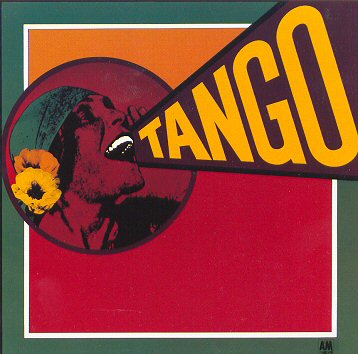
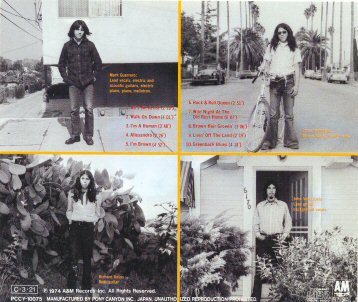
about the name. The album cover was the result of
another compromise. The A&M staff photographer,
Roland Young, wanted us to pose with our moms and
dads! When we didn’t show any enthusiasm for the idea, he
said “how about with your cars.” Ever the
diplomat, I said “how about at each of our houses.”
He agreed so we each posed at our respective domiciles. These
photos appeared on the back cover. The front cover wound
up resembling the front of a cereal box, with a lady, left
hand cupping her mouth, shouting the word “Tango.”
In retrospect, I don’t think the name or the cover was
any help to our cause. In fact they were major detriments.
If you saw the album in a record store with a cover that said
the word “Tango” with no picture of the band on
the front, you would most likely think it was an album of
Argentinian Tango music. The name, or album cover, didn’t
reflect what our music was all about.
We were part of
the Southern California sound of the time, contemporary to
the first albums of the Eagles, America, and Jackson Browne.
We just happened to be Chicano. Aside from the fact that
Capitol and A&M couldn't see past our ethnicity, many
unfortunate things occurred. Our master tape was stolen
and held hostage by our previous manager, which led to dueling
lawyers and a two month delay in finishing the album. A
new manager came in to represent us and left just as quickly in
the midst of the chaos, pulling the proverbial rug out from
under our feet that were still not wet in the business.
The record company didn’t know what to make of us or how to
promote us and we were too young and inexperienced to know what
to do about it. I remember a meeting with a major figure
at the label, who asked me to describe our music and image in
terms of other artists. I said, “maybe Buffalo Springfield.”
He replied, “I disagree. I think it’s more
like Tony Orlando.” No offense to Tony, whom I’ve
met, but our music and image had absolutely no similarity
to his. I figured the executive must have thought that
Orlando looked Latino and his last name also ended with an
“o,” the only two things Tony and I had in common.
It was then I realized the record company had no clue who
we were or what we were trying to do.
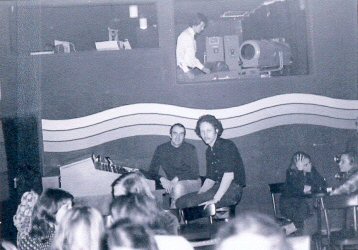
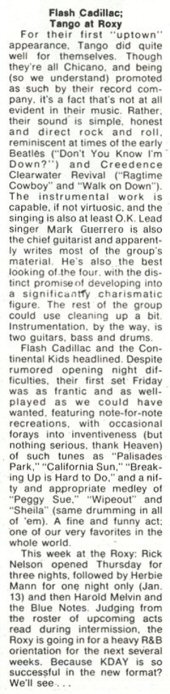
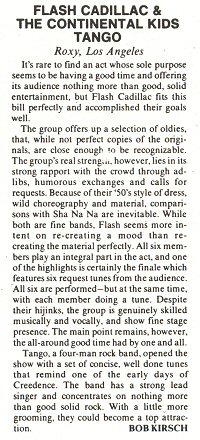
We were
booked into the brand new Roxy Theater in Hollywood, where
we were mismatched with Flash Cadillac and the Continental
Kids. They were a 1950s revival band, so their audience
was surprised to see four young Chicanos playing 70s
rock and country rock music. We went over reasonably
well, but it was definitely not our crowd. Our weekend
engagement as the opening act at the Roxy received some good reviews
in the press. We got positive reviews from Richard Cromelin
in the L.A. Times, Billboard Magazine, Todd Everett in the
L.A. Free Press, and the Daily Variety. With no manager,
we had no one to lobby for our interests at the record company.
We got very little, if any, promotion and were not given the
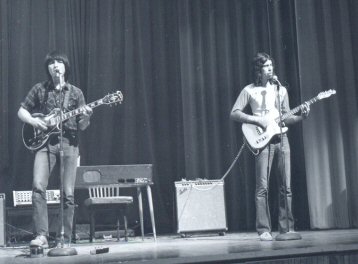
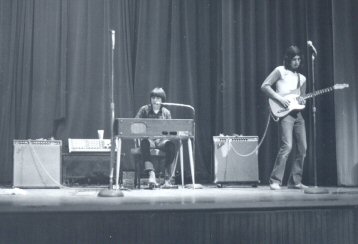
opportunity to tour to support the album. The only shows
we did besides the Roxy was one at UCLA on the bill
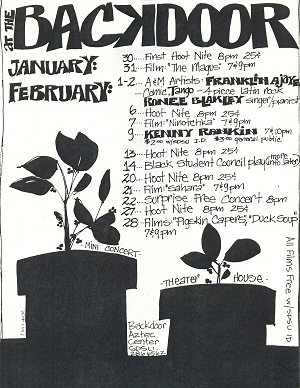
with comedian Franklin Ajaye and another at San Diego State
University on the bill with singer/pianist/actress, Ronee
Blakely. Blakely shortly thereafter was in the Robert
Altman movie "Nashville" and subsequently was part
of Bob Dylan's 1975 Rolling Thunder Revue. Not surprisingly,
with all the problems outlined above, the Tango album got
some scattered airplay and faded. The band broke up in 1975.
In 1983, the members of Tango all got together in Richard
Rosas’ studio in Laurel Canyon and recorded two of my
songs, “Hollywood” and “Song and Dance Man.”
It was like we’d never stopped playing together. In
1990, the Tango album was reissued in Japan on CD, but to
my knowledge it's currently unavailable unless you find
a used copy at a record show or on line. However, I’m
working on getting all nineteen of the recordings we did reissued.
I think the Tango album still sounds
good today and the songs stand up and don’t sound dated.
I’m also happy with most of the arrangements and performances
to this day. There are three or four that, if I knew
then what I know now, I would have added or subtracted some
things in the arrangements. There's also one lead vocal,
which was recorded live in the studio, I would have redone.
Richard Rosas, later known as Rick “the Bass Player”
Rosas,
went on to play for about 15 years with Joe Walsh. He
also did a stint with Neil Young in the late 80s, touring
and playing on the “Neil Young and the Blue Notes”
and “Freedom” albums. The latter album included
the classic "Rockin' In the Free World." In 2005,
Richard joined Neil Young again to tour and play on his next
four albums; "Prairie Wind," "Living with War," "Chrome
Dreams II," and "Fork In the Road." He also played
bass in Neil Young's "Heart of Gold" movie/DVD, the 2006
Crosby, Stills, Nash, & Young tour, and the
2011 Buffalo Springfield reunion tour.
I take pride in the knowledge that I got him started in
music in 1964 by presenting him with the opportunity that if
he bought a bass he could join my band. Also, playing and recording the
first ten years of his career with my bands from Mark &
the Escorts to Tango, gave him the experience necessary to
play with Walsh and Young. (During that time span we
recorded for G.N.P. Crescendo, Kapp, Capitol, and A&M
Records.) Ernie Hernandez, after touring
around the Southwest and Midwest with cover bands for several
years, went into the construction business. John Valenzuela,
after playing a few more years, also went into construction.
John married Ernie’s sister Anna. They had two
sons and two daughters who turned out very well; a doctor,
a teacher, a chef, and a recording engineer. I went
back to school in 1976 and got a bachelor’s degree in
Chicano studies at Cal State L.A. and have continued to make
a living playing music. I’ve continued to write
and record my own songs as a solo artist and my songs have
been recorded by artists such as Herb Alpert, Trini Lopez,
Chan Romero, and my dad, Lalo Guerrero. Because of my Chicano
music website and subsequent internet radio show, "Chicano
Music Chronicles," I've been asked to do lectures on
Chicano music at universities and my articles have appeared
in magazines in the U.S. and England. I've performed
at venues such as the Cavern in Liverpool, England and with
my dad at the Cite de la Musique in Paris, France. I
also played as a member of the legendary Native-American
band, Redbone in 2004 and 2010-11 and toured with the Cannibal &
the Headhunters Band, backing classic rock artists such as Denny Laine (Moody Blues, Wings), Joey Molland (Badfinger), Terry
Sylvester (Hollies), Dennis Tufano (Buckinghams), and Sonny
Geraci (Outsiders, Climax) (2011). My current group,
the Mark Guerrero Band, occasionally
do concerts around the Southwest.
Update
In March of 2004, Tango reunited at the wedding of John Valenzuela's
son James. Held in the back yard of John's home in Hacienda
Heights, CA, all four original members of Tango (Mark Guerrero,
John Valenzuela, Richard Rosas, and Ernie Hernandez) played
for about a half and hour. With no rehearsal, we did
three songs from our 1973 A&M album ("Rock &
Roll Queen," "Brown Hair Growin'," and "I'm
Brown") and they sounded great. They kicked right
in. Apparently, the songs are permanently wired to our
hard drives. We also did Hank Williams' "Honky
Tonk Blues," sung by John, and I sang Van Morrison's
"Tupelo Honey." Playing with the guys again
after all those years reminded me that Tango has a distinct
style and sound that has a bluesy, funky edge.
In
2009, Tango had our first public reunion at East Los Angeles
College for the re-issuing of the book "Land of a Thousand
Dances" by Tom Waldman and David Reyes. Rick Rosas was
not available since he was on tour with Neil Young, so John
Valenzuela's brother Leo sat in on bass. (Rick has
however played with us for three Mark & the Escorts reunion
shows since 2009.) In April of 2012, all four original
members of Tango reunited at a rehearsal hall called The
Alley in North
Hollywood to play all my songs we recorded back in the early-70s. We video taped it and had a great time.
Once again, the songs were still readily available in our
memories and sounded great.
I'm pleased
to say "I'm Brown" has gotten some cultural and
historic recognition in two major museum exhibits. The
"Tango" album cover was on display in 2009 on the album wall
with "I'm Brown" on an ipod, at the Experience Music
Project Museum in Seattle, Washington. It's part of
a 5,000 square foot multi-media exhibit called "American
Sabor: Latinos In U.S. Popular Music," which opened in
October of 2007 and ran for eleven months before traveling
to Miami, San Antonio, Phoenix, and the Smithsonian
Institution in Washington D.C. In 2009, the Mark
Guerrero solo single of "I'm Brown" on Capitol Records was on display, along with the original manuscript of the
lyric,
at an exhibit called "Songs
of Conscience, Sounds of Freedom" at the National
Academy
of Recording Arts and Sciences' Grammy Museum in Los Angeles.
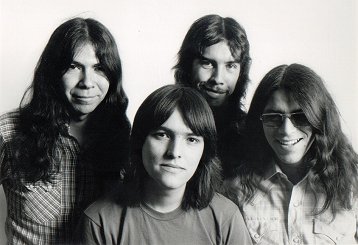
(top
left- Mark Guerrero / top right- Ernie Hernandez
bottom left- Rick Rosas / bottom right- John Valenzuela)
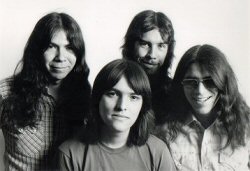
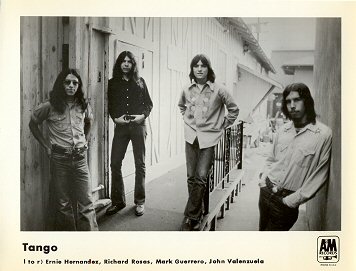
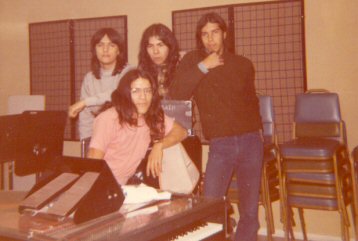
Tango A&M Photo (1973)
(left
to right-
Ernie Hernandez, Rick Rosas, Mark Guerrero, and
John Valenzuela)
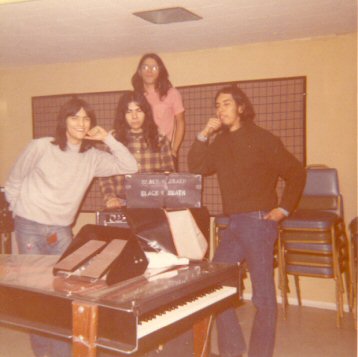
Tango (1973)
(left
to right-
Rick Rosas, Mark Guerrero, John Valenzuela, and
Ernie Hernandez)
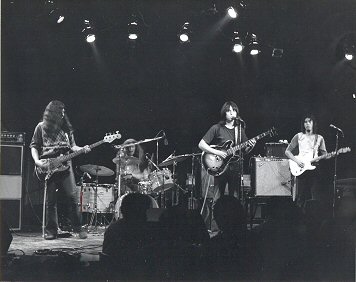
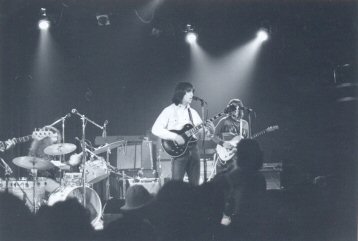
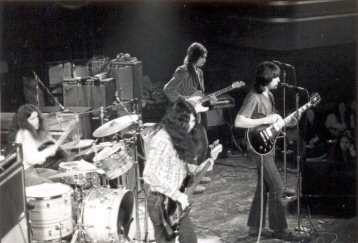
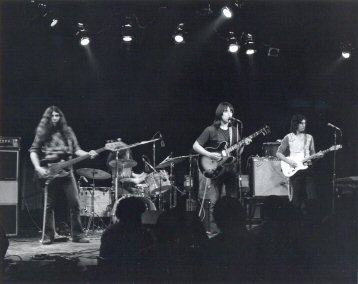
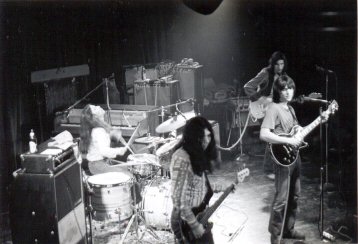
Tango "live" at the Roxy Theater in Hollywood,
CA (1974)
(left to right-
Rick Rosas, Ernie Hernandez, Mark Guerrero, and
John Valenzuela)
(left to right- Rick Rosas' left hand and bass
neck,
Ernie Hernandez, Mark Guerrero, and John Valenzuela)
(left to right-
Ernie Hernandez, Rick Rosas, John Valenzuela, and
Mark Guerrero)
(left to right- Richard, Ernie, Mark, and John)
(left to right- Richard bass head, Ernie, Mark,
and John)
top left- Richard left hand and bass neck, Ernie,
Mark, and John)
(left to right- Ernie, Richard, John, and Mark)
Joe Wissert
(producer
of our A&M recordings sitting at the board at
our performance at the Roxy)
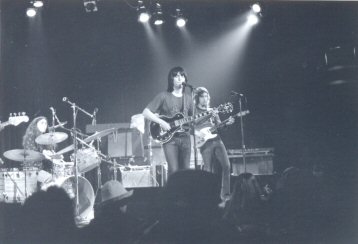
Tango at U.C.L.A. (1973)
Tango at U.C.L.A. (1973)
(left
to right- Mark and John)
(Ernie and Richard to left out of picture)
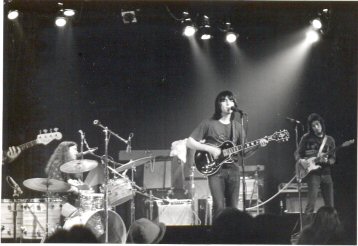
Tango at U.C.L.A. (1973)
(left
to right- Mark and John)
(Ernie and Richard to left out of picture)
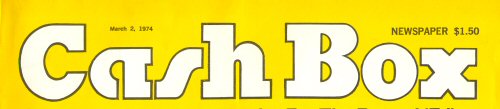
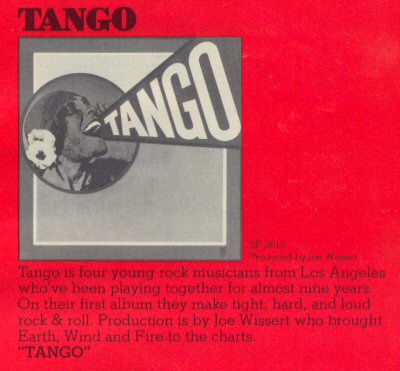
Tango
ad in Cashbox Magazine (March 2, 1974)
This
was the one ad in which we appeared. It was
one of six A&M artists advertised on one page,
along with Humble Pie, Peter Frampton, Toots and Svend,
Roger Kellaway, and Esperanto.
The copy which is blurry on this scan says:
Tango is four young rock musicians from Los Angeles
who've been playing together for almost nine years.
On their first album they make tight, hard, and loud
rock & roll. Production is by Joe Wissert
who brought Earth, Wind and Fire to the charts.
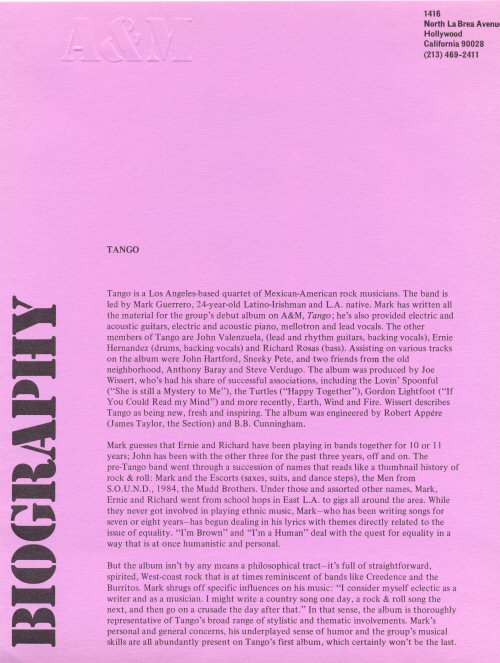
Tango bio written by
A&M publicity man Bob Garcia (1973)
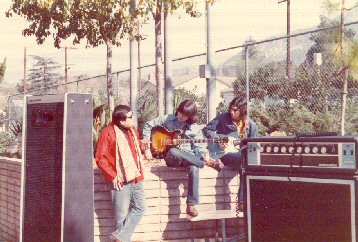
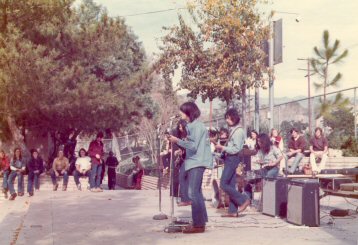
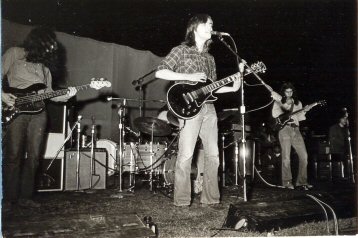
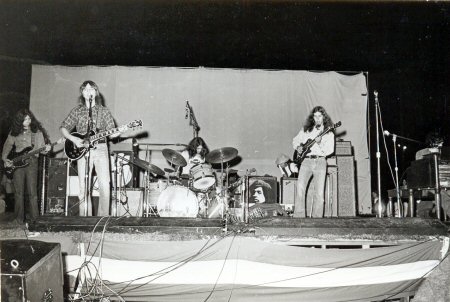
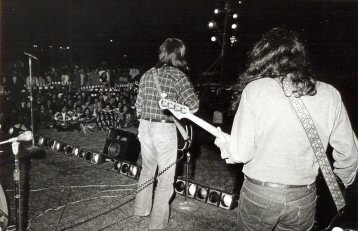
Tango in concert at
Verdugo Hills High School (1973)
Bob Garcia, Mark Guerrero, and John Valenzuela (1973)
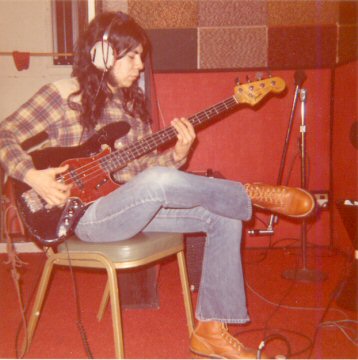
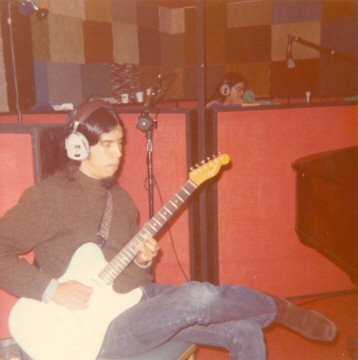
Recording at Independent
Studios- Studio City, CA (1972)
(During this period I was a
solo artist and Ernie, Richard, and John were backing me
on the sessions. We became Tango when we went to A&M
Records in 1973.)
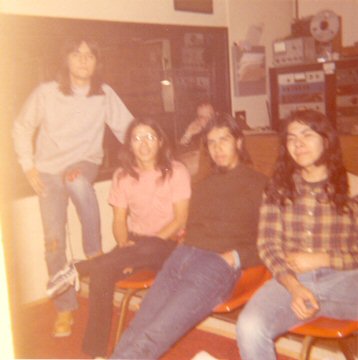
(left to right-
Mark Guerrero, Ernie Hernandez, Rick Rosas, and
John Valenzuela)
(left to right- Mark, Richard, Ernie, and John)
(left to right- Mark, Ernie, John, and Richard)
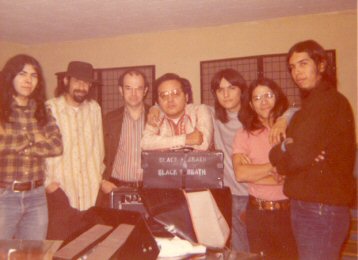
(left to right- Rick
Rosas, B.B. Cunningham (engineer), Phil Sonnichsen
(ethnomusicologist), Art Brambila,
Mark Guerrero, Ernie Hernandez, and John Valenzuela)
Rick Rosas
John Valenzuela
Flyers
/ Photos
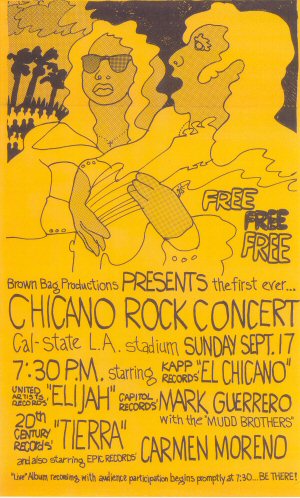
The flyer below was from an historic concert at Cal State
L.A. in 1972 during the period when Mark Guerrero was a solo
artist backed by Ernie Hernandez, Rick Rosas, and John
Valenzuela (pre-Tango). Anthony Baray of the popular
East L.A. band the Emeralds performed with us on Hammond organ.
El Chicano, Tierra, Elijah, and Carmen Moreno were
also on the bill.
Cal State L.A. - September
17, 1972
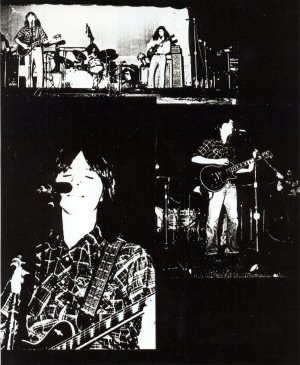
Photos from Chicano
Rock Concert at Cal State L.A.
Photo collage of Mark Guerrero & the Mudd Brothers
at Cal State L.A.
Rick Rosas, Mark
Guerrero, and John Valenzuela (Ernie Hernandez behind Mark and Anthony Baray
far right)
Rick Rosas, Mark Guerrero, Ernie Hernandez, and
John Valenzuela
Mark Guerrero & Rick Rosas
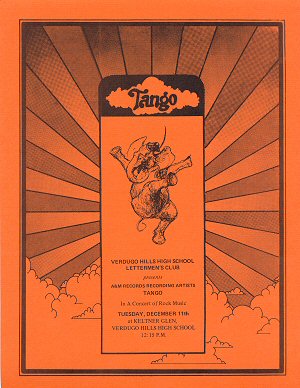
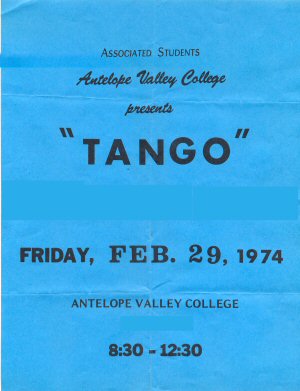
Tango flyers
Verdugo Hills High School - December 11, 1973
The Backdoor Aztec Center
San Diego State University
February 1 & 2, 1974
Antelope Valley College
February 29, 1974
Reviews
(The Tango
Reviews are in the last paragraph of the two clippings below)
Click here to read about the Tango
Reunion in 2009